
The Romance Tropes Behind Catch and Release (And Why Readers Love Them)
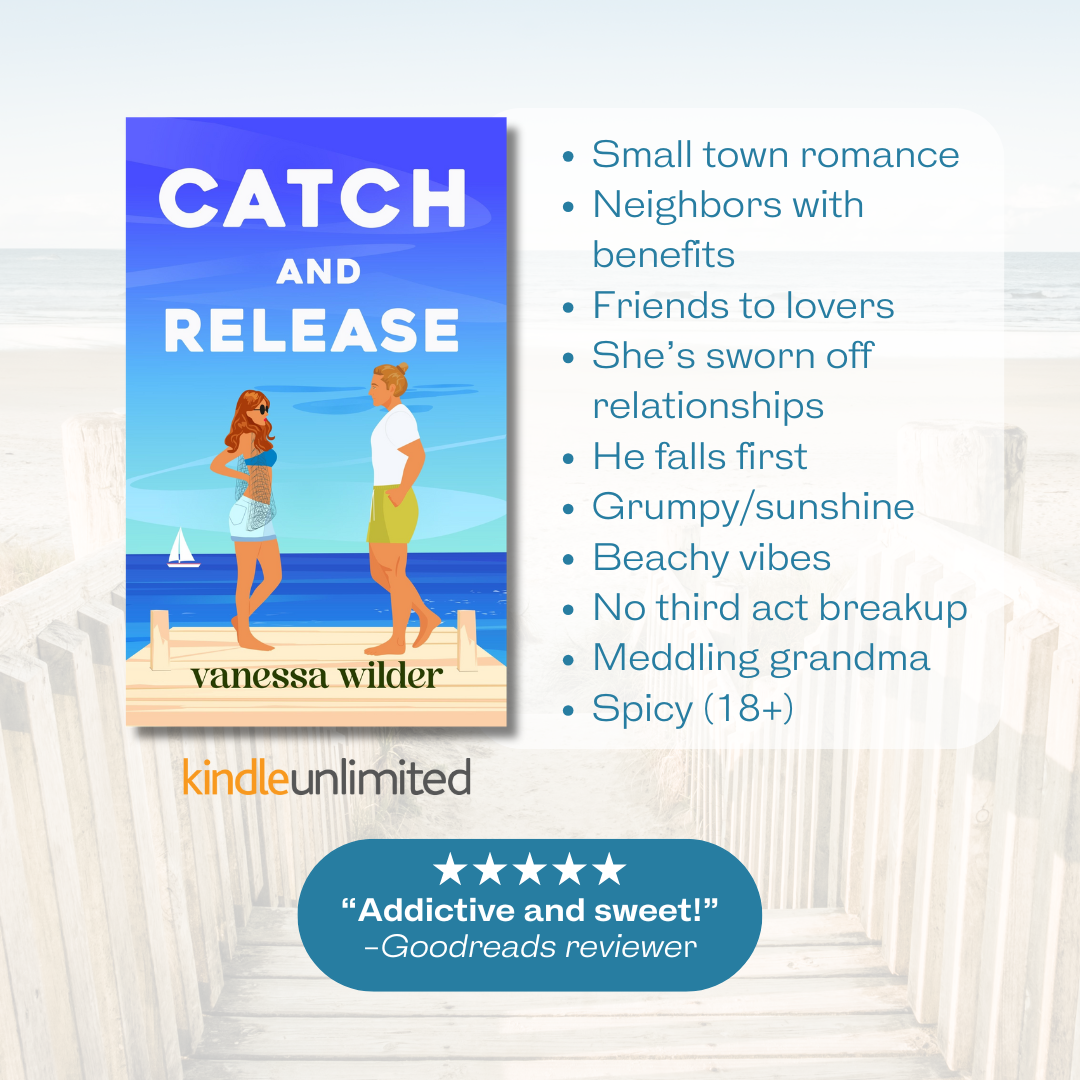
Read Catch and Release on Kindle Unlimited.
Buy a signed copy of Catch and Release here.
If you’ve ever finished a romance novel and thought, “I need more of whatever that was…”
Chances are, you’re really craving a trope.
Tropes aren’t clichés.
They’re emotional promises.
They tell readers what kind of tension, payoff, and romantic energy they’re signing up for.
In Catch and Release, I leaned into nine of my favorite romance tropes — the ones that create chemistry, emotional depth, and open-door heat without veering into dark territory.
Let’s break them down.
1. Small-Town Romance
What it is:
A romance set in a tight-knit community where everyone knows everyone — and everything.
Why readers love it:
Small-town romance raises the emotional stakes instantly.
There’s no disappearing after a fight.
No hiding your feelings.
No avoiding the man who lives next door.
It also creates found family energy — best friends, meddling relatives, side characters who matter.
In Catch and Release:
Set in Gulf Shores, this story is steeped in beach-town gossip, loyal friendships, and a grandmother who definitely has opinions. The community isn’t background — it shapes the love story.
2. Friends with Benefits
What it is:
Two characters agree to keep things physical. No emotions. No complications.
(It never stays that way.)
Why it works:
This trope is built on denial.
They say it’s casual.
It’s not casual.
Readers love watching the emotional unraveling — especially when one of them falls first.
In Catch and Release:
Willa swears off relationships. Shawn agrees to keep things “simple.” Neither of them is prepared for how not simple it becomes.
3. Neighbors to Lovers
What it is:
They live next door. Proximity is unavoidable.
Why it’s addictive:
There’s built-in tension.
Shared driveways.
Accidental run-ins.
Domestic familiarity.
It makes the romance feel grounded and intimate.
In Catch and Release:
Shawn is the fisherman next door. He’s always there. Always watching. Always noticing. Avoidance isn’t an option — and neither is the chemistry.
4. Friends to Lovers
What it is:
The relationship builds on trust before romance takes over.
Why readers connect to it:
It feels earned. Real. Steady.
There’s emotional safety before emotional risk — which makes the spice hit harder.
In Catch and Release:
What begins as neighborly tolerance slowly shifts into friendship. And once that foundation is built, the line between platonic and physical starts to blur.
5. Fake Dating
What it is:
Two characters pretend to be together for a specific reason.
Why it’s so fun:
Public affection.
Jealousy triggers.
Forced closeness.
And the classic: “We’re just acting… right?”
It raises the stakes without immediate emotional vulnerability.
In Catch and Release:
In a small town where everyone is watching, fake dating only makes the tension sharper — especially when one of them isn’t pretending as much as they claim.
6. Jealous Male Main Character
What it is:
He doesn’t control her.
But he definitely doesn’t like someone else getting too close.
Why readers love it (when done right):
Jealousy reveals emotional investment.
It signals:
I care.
I want you.
I’m not as detached as I pretend to be.
The key is that it’s protective — not possessive in a harmful way.
In Catch and Release:
Shawn may claim they’re casual, but the moment another man shows interest, his calm fisherman energy shifts.
Subtle. Controlled. Intentional.
7. Possessive Hero (Without Toxic Alpha Energy)
What it is:
A hero who claims, chooses, and protects — without isolating or overpowering.
Why it works:
It creates devotion.
The “mine” energy that readers crave isn’t about ownership.
It’s about loyalty.
When done well, it feels safe, steady, and emotionally grounded.
In Catch and Release:
Shawn’s possessiveness shows up as closeness, teasing, physical awareness, and unwavering loyalty — not dominance or control.
8. Grumpy, Brooding Hero
What it is:
Quiet. Guarded. Slightly moody. Soft on the inside.
Why it’s irresistible:
Watching a brooding hero unravel emotionally is deeply satisfying.
The contrast between stoic exterior and intense inner feelings creates powerful romantic tension.
In Catch and Release:
Shawn isn’t loud about his emotions. He doesn’t grandstand. But he feels everything — and once he falls, he falls hard.
9. He Falls First
What it is:
The hero realizes he’s in love before she does.
Why readers adore it:
It flips the traditional emotional arc.
Instead of the heroine chasing clarity, the hero sits in quiet devotion while she figures it out.
It heightens:
Jealousy
Protectiveness
Emotional tension
Romantic payoff
In Catch and Release:
Willa swears off men.
Shawn? He’s already halfway gone — even if he pretends he isn’t.
Why These Tropes Work Together
On their own, each trope builds tension.
Together, they create:
• Forced proximity
• Emotional denial
• Playful jealousy
• Physical chemistry
• Community pressure
• A hero who falls first
• And a happily-ever-after without emotional whiplash
That combination makes Catch and Release feel spicy, funny, intimate, and emotionally satisfying — without being dark.
If you love small-town romance with possessive heroes, beach-town vibes, and friends-to-lovers tension, you’re exactly the kind of reader this book was written for.